
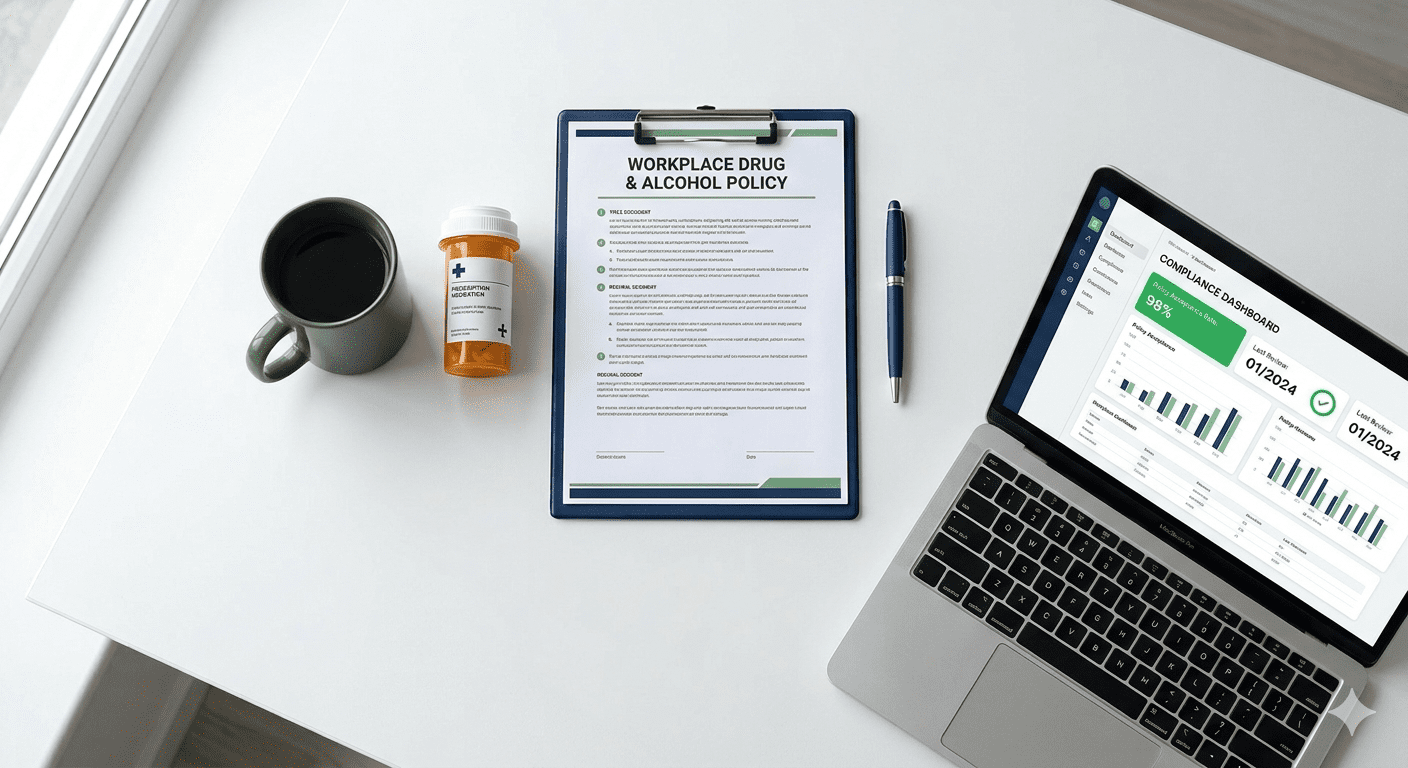
The legalisation of medicinal cannabis in Australia has created one of the most complex challenges facing workplace health and safety programs today. With prescriptions increasing year on year, employers are encountering a growing tension between an employee’s right to use a legally prescribed medication and the organisation’s obligation to maintain a safe workplace.
This article examines the current legal landscape, the practical implications for drug and alcohol testing programs, and how employers can navigate this evolving area with confidence.
The Current State of Medicinal Cannabis in Australia
Since 2016, medicinal cannabis has been legally available in Australia through the Therapeutic Goods Administration (TGA). Patients can access cannabis-based products — including THC-containing formulations — via a prescription from an authorised medical practitioner.
The number of prescriptions has grown substantially. The TGA’s Special Access Scheme and Authorised Prescriber pathways have made access increasingly straightforward, and the range of conditions for which medicinal cannabis is prescribed continues to broaden. Common conditions include chronic pain, anxiety, epilepsy, and chemotherapy-related nausea.
For employers, the critical point is this: an employee who tests positive for THC may be using a legally prescribed medication. This does not, however, automatically exempt them from your drug and alcohol policy.
Legal Prescription Does Not Equal Fitness for Duty
This is the single most important principle for employers to understand. A valid prescription is not a defence against impairment in the workplace.
The Work Health and Safety Act 2011 requires PCBUs to ensure, so far as is reasonably practicable, the health and safety of workers. This duty exists regardless of whether a substance is legally prescribed. The same principle applies to other prescription medications that may cause impairment — opioid painkillers, benzodiazepines, and certain antihistamines, for example.
Several Fair Work Commission decisions have reinforced this position. In cases where employees have been dismissed following a positive THC result, the Commission has consistently examined whether:
- The employer had a clear, communicated drug and alcohol policy.
- The policy addressed prescription medications.
- The employee was given the opportunity to disclose their prescription.
- The role involved safety-sensitive duties.
Updating Your Drug and Alcohol Policy
If your policy was written before medicinal cannabis became prevalent, it likely needs updating. At a minimum, your policy should address the following:
Disclosure Requirements
Require employees to disclose any prescription medication that may affect their capacity to perform their role safely. This should be a confidential process, typically managed through HR or occupational health. The disclosure obligation should apply to all potentially impairing medications, not just cannabis — this avoids singling out any particular condition or treatment.
Fitness for Duty Assessments
When an employee discloses a medicinal cannabis prescription, the appropriate next step is a fitness for duty assessment. This should be conducted by a qualified occupational health practitioner and should consider:
- The specific role and its safety requirements.
- The type and dosage of the prescribed product.
- The timing of use relative to work hours.
- Any available evidence regarding the individual’s functional capacity.
Role-Specific Risk Assessments
Not all roles carry the same risk profile. An employee in an administrative role presents a fundamentally different risk to one operating heavy machinery, driving a vehicle, or working at heights. Your policy should acknowledge this distinction and allow for risk-based decision-making.
The Testing Challenge
Standard workplace drug testing detects the presence of THC or its metabolites. What it does not do is reliably measure current impairment. This is a critical distinction.
THC can be detected in oral fluid for up to 24-72 hours after use, and in urine for days or even weeks in regular users. An employee who uses medicinal cannabis in the evening, as prescribed, and attends work the following morning may test positive despite not being impaired.
This creates a genuine dilemma for employers. The testing technology available today detects presence, not impairment. Until reliable impairment testing becomes commercially available, employers must manage this gap through a combination of policy, process, and professional assessment.
Practical Approaches
- Maintain your testing program. The existence of medicinal cannabis does not invalidate workplace drug testing. Continue to test as per your policy.
- Establish a Medical Review Officer (MRO) process. When a confirmed positive result is received, refer it to an MRO who can assess whether a valid prescription exists and provide guidance on fitness for duty.
- Document your decision-making. Every decision — whether to stand an employee down, modify their duties, or clear them for work — should be documented with clear reasoning.
- Treat each case individually. Blanket rules are unlikely to withstand scrutiny. Assess each situation on its specific facts and risks.
Common Employer Mistakes
Several patterns emerge from Fair Work Commission cases and industry experience:
- Automatic termination for any positive THC result. Without considering whether the employee has a prescription and whether they were actually impaired, this approach is likely to be found unreasonable.
- No disclosure mechanism. If employees have no confidential pathway to disclose prescription medications, the employer is operating without critical information.
- Ignoring the issue entirely. Some organisations have responded to the complexity by simply not addressing medicinal cannabis in their policy. This creates greater risk, not less.
- Inconsistent application. Allowing exceptions for some employees or roles while enforcing strictly for others, without a documented risk-based rationale, invites claims of unfair treatment.
What About CBD-Only Products?
Some medicinal cannabis products contain only cannabidiol (CBD) with no THC. Since February 2021, low-dose CBD products (up to 150mg per day) have been available over the counter in pharmacies.
CBD-only products should not trigger a positive result on standard workplace drug tests, which target THC. However, some products marketed as CBD-only may contain trace amounts of THC, which could potentially result in a positive screening test. Employees should be advised to confirm the composition of their medication with their prescribing practitioner.
Looking Ahead
This area of law and workplace practice continues to evolve. Employers should monitor developments in:
- Impairment testing technology, which may eventually provide a more reliable measure of current fitness for duty.
- Fair Work Commission decisions that refine the boundaries of employer and employee obligations.
- State-based road safety laws, which interact with workplace requirements for employees who drive as part of their role.
- TGA regulatory changes that may affect the availability or classification of cannabis-based products.
Key Takeaways for Employers
Medicinal cannabis is a legitimate medical treatment, but it does not override your obligation to maintain a safe workplace. The most defensible approach is one that combines a clear policy, a confidential disclosure process, individualised fitness for duty assessments, and consistent documentation.
If your current drug and alcohol testing program needs to account for medicinal cannabis — or if you are still managing results and records manually — FairTest can help you maintain a structured, auditable program. Start your free trial today.