
The utilities and energy sector encompasses some of the most safety-critical roles in the Australian workforce. Linesmen working on energised electrical infrastructure, gas technicians operating in confined spaces, water treatment operators managing chemical processes, and control room staff overseeing critical infrastructure — each of these roles demands sustained attention, sound judgement, and physical precision. The margin for error is often measured in the difference between a safe day and a fatality.
Drug and alcohol testing in this sector is not a discretionary safety enhancement. It is a fundamental component of ensuring that workers in these high-consequence roles are fit for duty every time they present for work.
High-Risk Roles in Utilities and Energy
The utilities and energy sector includes a wide range of roles, many of which carry extreme safety consequences if performed by an impaired worker.
Working at Heights
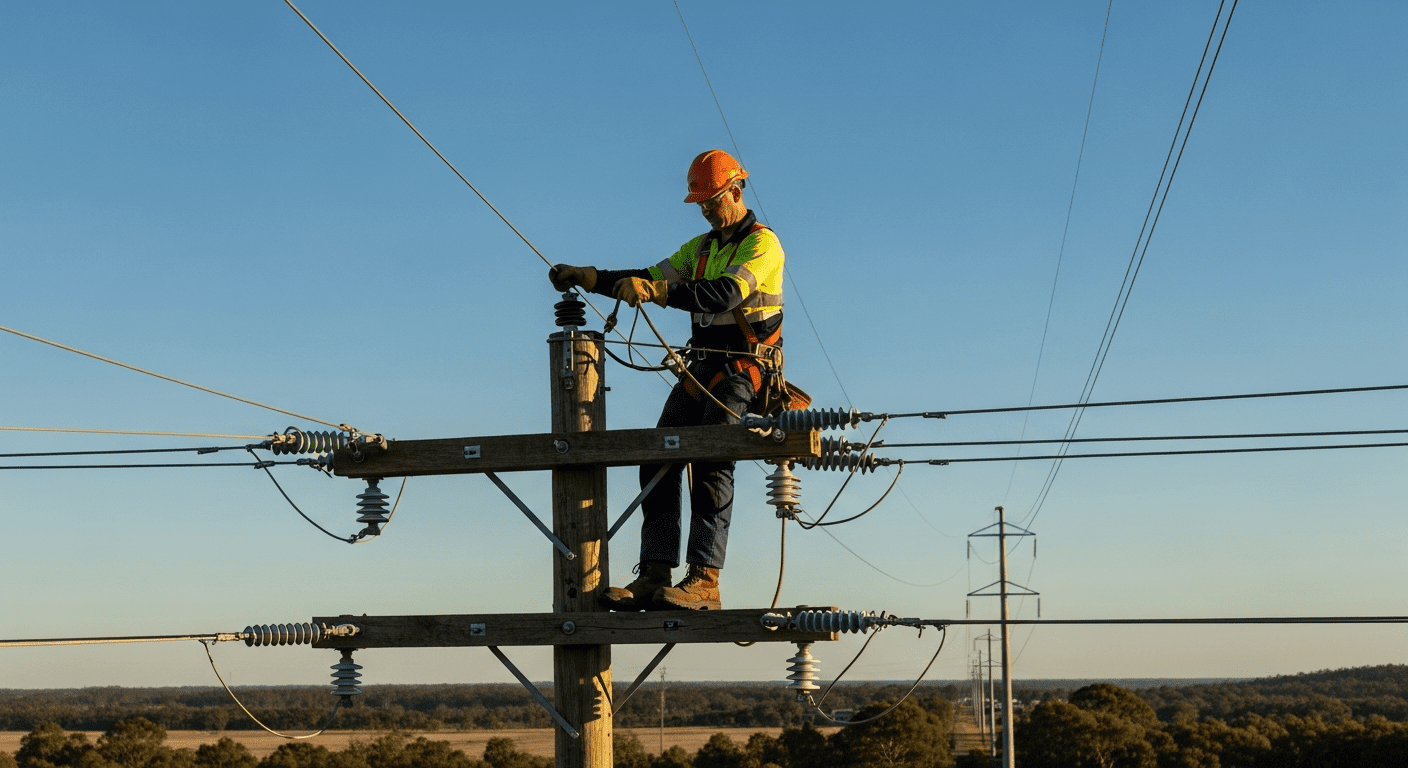
Linesmen, telecommunications technicians, and wind turbine technicians routinely work at heights — on poles, towers, transmission structures, and elevated platforms. Working at heights is one of the highest-risk activities in any industry. Impairment affects balance, coordination, grip strength, and spatial awareness — all of which are critical at height. A fall from a utility pole or transmission tower is likely to be fatal.
Live Electrical Work
Electrical linesmen and substation technicians may work on or near energised infrastructure carrying tens of thousands of volts. Live line work requires extraordinary concentration, precise hand-eye coordination, and strict adherence to safety procedures. Any impairment — whether from drugs, alcohol, or fatigue — exponentially increases the risk of electrocution.
Confined Spaces
Gas workers, water and sewerage technicians, and telecommunications workers frequently enter confined spaces — pits, manholes, tanks, and underground vaults. Confined space work carries risks of asphyxiation, poisoning, and entrapment. An impaired worker in a confined space may fail to recognise warning signs, be unable to self-rescue, or compromise the safety of the rescue team.
Chemical and Process Operations
Water treatment plants, gas processing facilities, and power stations involve chemical handling, pressurised systems, and complex process control. Operators in these environments must maintain constant vigilance and respond quickly to abnormal conditions. Impairment can lead to incorrect valve operations, missed alarms, and chemical releases.
Driving and Mobile Plant
Utilities workers are among the most mobile workforces in Australia. Linesmen, technicians, and meter readers spend much of their day driving between work sites, often in heavy vehicles with specialised equipment. Fleet vehicle incidents are a significant source of injury in the sector.
24/7 Operations
Electricity, gas, water, and telecommunications are essential services that operate around the clock. This has significant implications for drug testing programs.
Shift Coverage
Control room operators, maintenance crews, and emergency response teams work rotating shifts — days, afternoons, and nights. A testing program that only operates during business hours will fail to cover a substantial portion of the workforce and will miss the shifts where fatigue and impairment risks may be highest.
Design your program to ensure proportional coverage across all shifts. This may require:
- Training shift supervisors as collection officers so that testing can be conducted at any time.
- Scheduling testing events at shift changeover, when both incoming and outgoing crews are present.
- Using a selection system that accounts for roster patterns and ensures workers on different shifts have an equal probability of selection.
On-Call and Emergency Response
Utilities workers are frequently on call for fault response and emergency work. A linesman called out at 2am to restore power after a storm, or a gas technician dispatched to a reported leak, must be fit for duty. Your policy should clearly address on-call workers — including the expectation that workers on call must be free from the impairing effects of drugs and alcohol and the consequences if they are not.
Some organisations require on-call workers to undergo testing before commencing emergency work if there is any reason to suspect impairment. This must be balanced against the urgency of the response — delaying a critical repair to conduct a test is not always practical, but documenting the decision and conducting post-event testing is.
Multi-Site Management
Utilities and energy organisations typically operate across large geographic areas with many dispersed work sites. A single electricity distribution network may cover thousands of square kilometres, with linesmen and technicians working from depots scattered across the service area.
Centralised Program, Local Execution
The most effective approach is to centralise the program’s design, policy, selection methodology, and record-keeping while enabling local execution of the testing itself. Depot supervisors or designated personnel at each location should be trained and equipped to conduct collections, while the selection process and data management are handled centrally.
Consistency Across Locations
Workers should experience the same program regardless of which depot, site, or control room they work from. Consistent application avoids perceptions of unfairness and ensures the program is legally defensible across the entire organisation.
Critical Infrastructure Obligations
Utilities and energy companies are classified as critical infrastructure operators under the Security of Critical Infrastructure Act 2018 (SOCI Act). While the SOCI Act’s primary focus is on cyber and physical security threats, the broader obligation to maintain the operational resilience of critical infrastructure supports the case for comprehensive fitness-for-duty programs, including drug and alcohol testing.
An impaired control room operator who fails to respond to a system alarm, or a technician who causes a gas leak through impaired performance, can create consequences that extend far beyond the workplace — affecting public safety, essential service delivery, and community trust.
Integration With Safety Systems
Drug and alcohol testing in utilities should be fully integrated with the organisation’s broader safety management system:
- Fatigue management — substance impairment and fatigue are compounding risks. Testing programs should operate alongside fatigue risk management systems, particularly for shift workers and on-call personnel.
- Competency and training — drug and alcohol awareness should be part of the competency framework for all safety-critical roles.
- Incident investigation — post-incident testing should be a standard component of incident investigation procedures for all safety-related events.
- Contractor management — contractors performing work on utility infrastructure must be subject to the same drug and alcohol standards as direct employees. This should be specified in contracts and verified through audit.
Protecting Workers and the Community
The utilities and energy sector carries a dual responsibility — to protect its workers from the extraordinary hazards they face and to protect the community that depends on the essential services they provide. A comprehensive drug and alcohol testing program, designed for the realities of 24/7 operations, dispersed workforces, and extreme-consequence work, is fundamental to meeting both obligations.
If your utilities or energy organisation is managing drug testing across linesmen, technicians, control room operators, and contractors, FairTest provides the platform to run your program at scale — from roster-aware selections and multi-depot management to digital test records and the compliance reporting your organisation needs. Start your free trial today.