
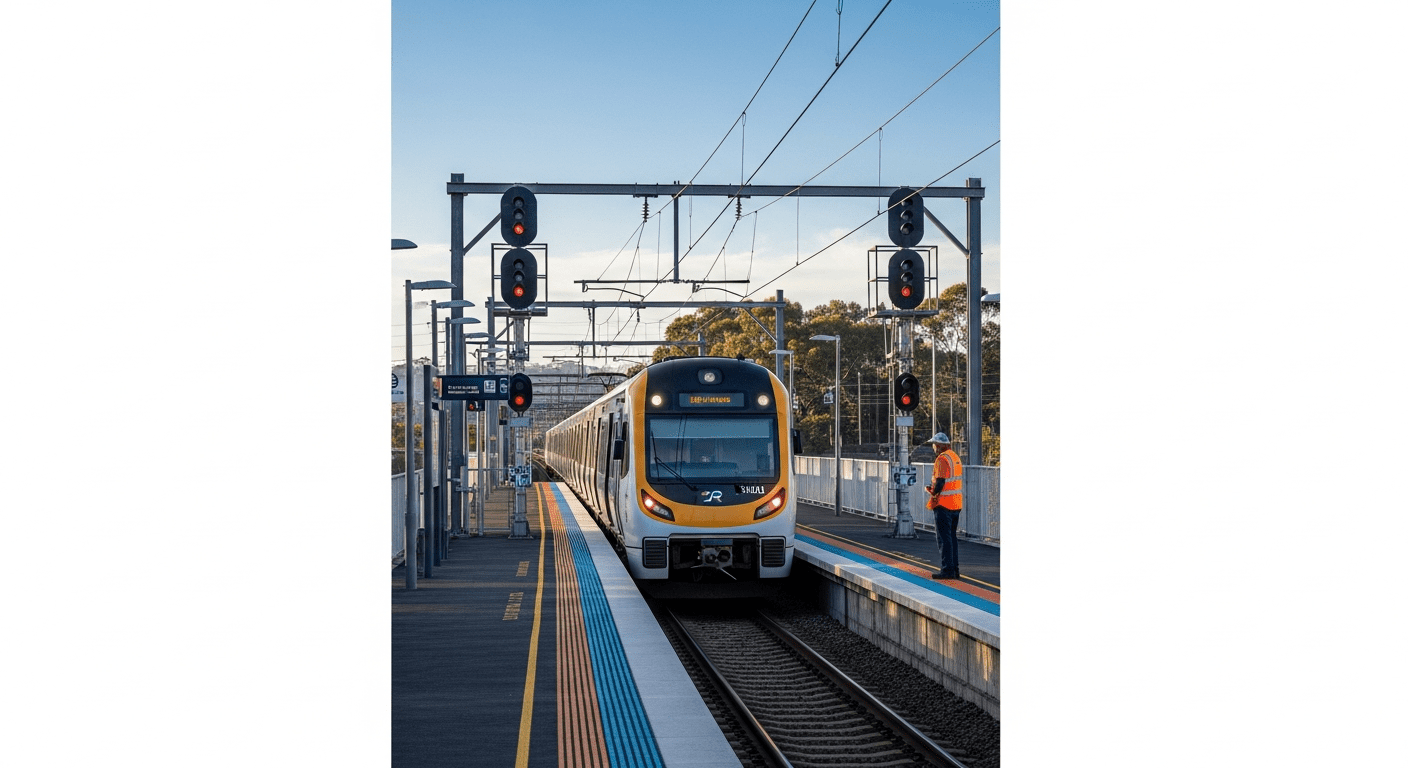
The Australian rail industry operates under one of the most prescriptive regulatory frameworks for drug and alcohol management of any sector. The Rail Safety National Law (RSNL) and the oversight of the Office of the National Rail Safety Regulator (ONRSR) impose specific obligations on rail transport operators and rail safety workers that go well beyond general workplace health and safety requirements.
For rail operators, contractors, and the workers themselves, understanding these obligations is essential. Non-compliance carries serious consequences — not only for safety but also for accreditation, employment, and criminal liability.
The Rail Safety National Law
The RSNL provides the legislative foundation for rail safety regulation across most Australian jurisdictions. Under the RSNL, rail transport operators must have a Safety Management System (SMS) that addresses all aspects of rail safety, including the management of drug and alcohol risks.
Section 97 of the RSNL specifically addresses drug and alcohol programs. It requires rail transport operators to have a drug and alcohol program that is consistent with the national rail safety guidelines and that forms part of their SMS. The ONRSR assesses compliance with these requirements as part of the accreditation process and through ongoing regulatory oversight.
Key Legislative Requirements
- Rail transport operators must implement a drug and alcohol program as part of their SMS.
- The program must include testing of rail safety workers.
- Rail safety workers must not carry out rail safety work while impaired by drugs or alcohol.
- It is an offence for a rail safety worker to exceed prescribed blood alcohol or drug levels while performing rail safety work.
- Penalties for breaches can include fines and imprisonment.
ONRSR Requirements
The ONRSR has published guidelines and expectations for drug and alcohol programs that rail transport operators must satisfy. These requirements are more specific than general WHS obligations and reflect the high-consequence nature of rail operations.
Drug and Alcohol Management Plan
Rail transport operators are expected to have a documented drug and alcohol management plan that includes:
- A clear policy statement covering the operator’s position on drugs and alcohol in the rail environment.
- Identification of all rail safety worker roles subject to the program.
- Testing procedures that comply with AS/NZS 4308 (urine) or AS 4760 (oral fluid).
- A random testing program with defined frequency and methodology.
- Procedures for for-cause and post-incident testing.
- Consequences for positive results, including stand-down, confirmation testing, and disciplinary processes.
- Support and rehabilitation pathways, including access to an Employee Assistance Program.
- Education and awareness programs for all workers covered by the plan.
Reporting Obligations
Rail transport operators must report drug and alcohol testing results to the ONRSR as part of their safety reporting obligations. This includes the number of tests conducted, the number of positive results, the substances detected, and the actions taken. The ONRSR uses this data to monitor industry trends and to assess individual operator performance.
Who Is a Rail Safety Worker?
The definition of “rail safety worker” under the RSNL is broader than many people expect. It is not limited to train drivers and signallers — it captures anyone who has carried out, is carrying out, or is about to carry out rail safety work.
Roles Typically Captured
- Train drivers and co-drivers — the most obvious rail safety worker role.
- Signallers and train controllers — personnel who manage the safe movement of trains.
- Track workers — workers who maintain, repair, or construct track infrastructure.
- Rolling stock maintainers — personnel who inspect, service, and repair trains and wagons.
- Shunters and yard workers — workers involved in coupling, decoupling, and moving rolling stock in yards.
- Station staff with platform duties — workers responsible for safe train dispatch and passenger management.
- Network controllers — personnel who manage the overall operation of the rail network.
The critical test is whether the person is performing “rail safety work” — work that can affect the safety of rail operations. This is a functional definition, meaning it is the nature of the work being performed, not the person’s job title, that determines their status.
Contractors and Third Parties
The RSNL obligations extend to contractors and their workers who perform rail safety work on behalf of the rail transport operator. The operator must ensure that these workers are covered by the drug and alcohol program, which requires clear contractual provisions and practical arrangements for testing and reporting.
Testing Obligations
Random Testing
Random testing of rail safety workers is a core component of any rail drug and alcohol program. The ONRSR expects operators to conduct random testing at a frequency that provides a credible deterrent and a meaningful level of detection. While the ONRSR does not prescribe a specific percentage, it expects operators to justify their chosen frequency as part of their SMS.
The random selection process must be genuinely random, documented, and auditable. Every rail safety worker in the pool must have an equal probability of selection in each round.
For-Cause Testing
For-cause testing must be conducted when there is reasonable suspicion that a rail safety worker is impaired. This may be triggered by observable behaviour, reports from colleagues, or any other indicator that raises a genuine concern about fitness for duty.
Supervisors must be trained to recognise the signs that may indicate impairment and to document their observations before initiating a for-cause test.
Post-Incident Testing
Testing following a rail safety incident is expected and, in many cases, required by the operator’s SMS. The ONRSR expects operators to test all rail safety workers involved in a notifiable occurrence as soon as practicable after the event.
Pre-Employment and Return-to-Duty
Pre-employment testing is standard practice for rail safety worker roles, and return-to-duty testing is required before a worker who has previously returned a positive result is permitted to resume rail safety work.
Fitness for Duty
Drug and alcohol testing in rail is part of the broader concept of fitness for duty. Rail transport operators must ensure that rail safety workers are fit to perform their duties — not only free from substance impairment but also free from fatigue, unmanaged medical conditions, and other factors that could compromise safety.
The fitness-for-duty framework typically includes:
- Drug and alcohol testing.
- Fatigue risk management, including hours-of-work limits and rostering controls.
- Medical assessments, including the National Standard for Health Assessment of Rail Safety Workers.
- Ongoing monitoring and self-reporting obligations.
This integrated approach recognises that impairment can arise from multiple sources and that managing any single risk factor in isolation is insufficient.
Consequences of Non-Compliance
The consequences of non-compliance with rail drug and alcohol requirements are severe:
- For workers — criminal penalties for performing rail safety work while impaired, including fines and imprisonment. Loss of rail safety worker competency and, potentially, permanent exclusion from rail safety work.
- For operators — regulatory action by the ONRSR, including compliance notices, infringement notices, enforceable undertakings, and, in serious cases, suspension or cancellation of accreditation.
- For officers — personal liability under due diligence obligations.
Building a Compliant Rail Program
Rail drug and alcohol compliance requires a level of structure and documentation that exceeds most other industries. The program must satisfy not only general WHS requirements but also the specific expectations of the ONRSR and the requirements of the RSNL.
If your organisation operates in the rail sector, FairTest provides the tools to manage your drug and alcohol program to the standard the regulator expects — from genuinely random selections and comprehensive test records to the reporting data the ONRSR requires. Start your free trial today.