
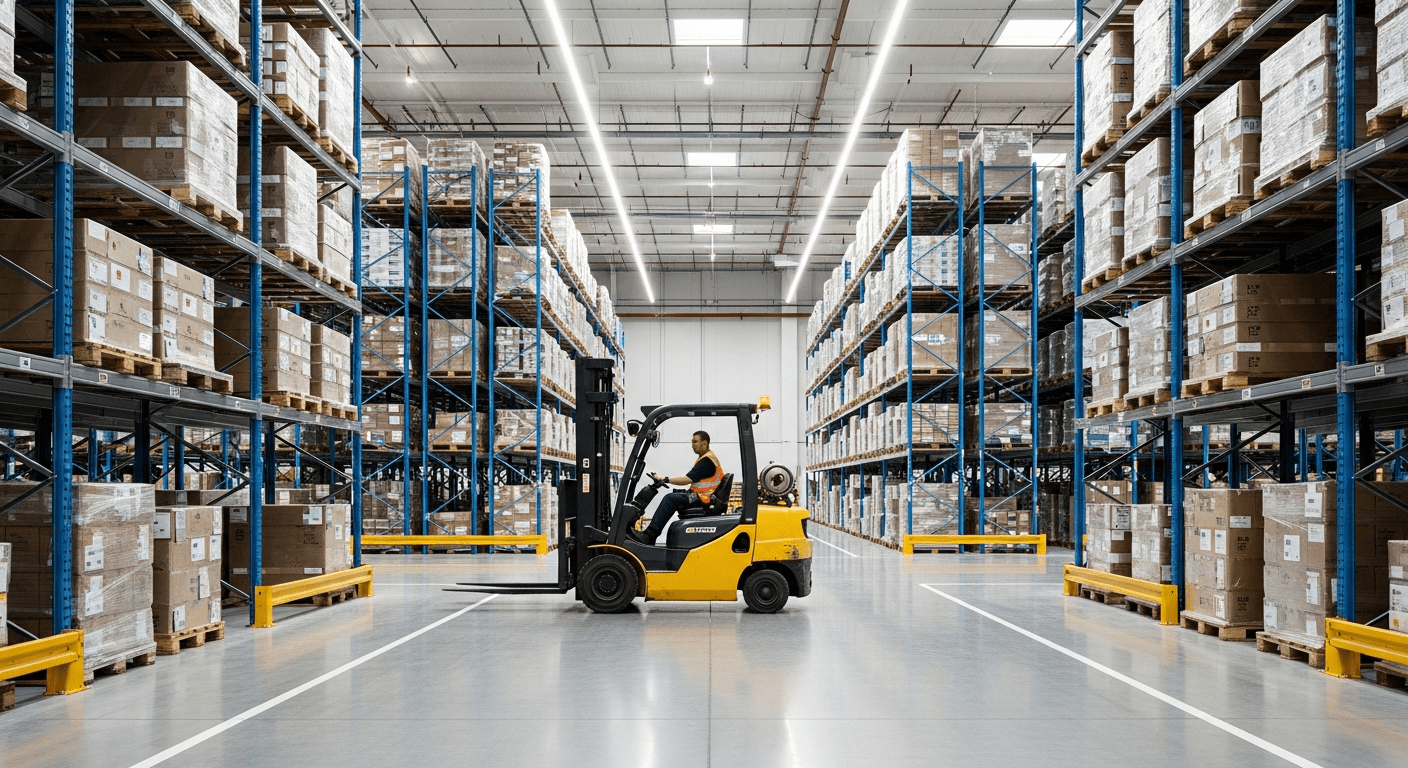
Manufacturing plants and warehousing operations are environments where heavy machinery, forklifts, conveyor systems, and repetitive physical tasks create a constant backdrop of safety risk. When substance impairment is added to this mix, the consequences can be catastrophic — crushing injuries, amputations, fatalities, and significant property damage.
Drug and alcohol testing in manufacturing and warehousing is not just a compliance exercise. It is a frontline safety measure that directly reduces the probability of serious incidents involving the machinery and equipment that define these industries.
The Scale of the Problem
Safe Work Australia data consistently shows that manufacturing and warehousing are among the industries with the highest rates of serious workplace injuries. Forklift incidents alone account for a significant number of workplace fatalities and serious injuries each year in Australia. While not all of these incidents involve substance impairment, the contribution of drugs and alcohol to workplace accidents is well established.
Impaired workers in a manufacturing or warehousing environment face compounded risks:
- Slowed reaction times — critical when operating forklifts in busy aisles or responding to unexpected equipment behaviour.
- Impaired judgement — leading to risky shortcuts, failure to follow lock-out/tag-out procedures, or operating machinery beyond its safe limits.
- Reduced coordination — increasing the likelihood of struck-by, caught-between, and fall incidents.
- Diminished attention — particularly dangerous during repetitive tasks where complacency is already a risk factor.
Identifying Safety-Sensitive Roles
Not every role in a manufacturing or warehousing operation carries the same level of machinery-related risk. A risk-based approach to testing identifies which roles are safety-sensitive and prioritises them within the program.
Highest Risk Roles
- Forklift and reach truck operators — operating powered industrial trucks in environments with pedestrians, racking, and other vehicles.
- Machine operators — working with presses, lathes, saws, injection moulders, packaging lines, and other powered equipment.
- Overhead crane and hoist operators — lifting and moving heavy loads over work areas.
- Drivers — delivery drivers, yard shunters, and anyone operating a vehicle as part of their role.
- Workers in confined spaces or at heights — where impairment increases the risk of falls, asphyxiation, or being unable to self-rescue.
Moderate Risk Roles
- Warehouse pickers and packers — working in proximity to forklifts and moving equipment.
- Assembly line workers — performing repetitive tasks that require sustained attention and coordination.
- Maintenance and trades personnel — working on or near energised or pressurised equipment.
While a risk-based approach may focus testing resources on the highest risk roles, many organisations choose to include all operational staff in the testing pool. This avoids perceptions of unfairness and recognises that even workers in lower-risk roles can be injured by — or contribute to — machinery incidents.
Shift-Based Testing Considerations
Manufacturing and warehousing operations frequently run multiple shifts, including night shifts, rotating rosters, and weekend operations. This has practical implications for testing logistics.
Covering All Shifts
A testing program that only operates during standard business hours will miss night-shift and weekend workers — often the very shifts where supervision is thinner and incident rates can be higher. Random selections must be structured to cover all shifts equitably.
Options include:
- Scheduling testing events across different shifts each period.
- Training shift supervisors as collection officers so that testing can be conducted on any shift without requiring external resources.
- Using a rolling selection schedule that ensures every shift receives proportional coverage over time.
Minimising Operational Disruption
Pulling a worker off a production line or out of a forklift for testing has an immediate impact on throughput. Work with your operations team to establish testing procedures that minimise disruption — for example, testing at shift changeover, during scheduled breaks, or at the start of a shift before work commences.
For-Cause Testing Triggers
For-cause (or reasonable suspicion) testing is a critical component of any manufacturing or warehousing testing program. It allows the organisation to test a specific individual when observable signs suggest they may be impaired.
Common Triggers in Manufacturing and Warehousing
- Erratic forklift operation — weaving, excessive speed, near-misses, or striking racking or stock.
- Unusual drowsiness, lack of coordination, or unsteady movement near machinery.
- Slurred speech, bloodshot eyes, or the smell of alcohol.
- Unexplained errors in tasks that the worker normally performs competently.
- Self-disclosure or reports from co-workers.
Documenting the Decision
For-cause testing decisions must be documented at the time they are made. The supervisor should record the specific observable signs that led to the decision, the time of observation, any witnesses, and the steps taken. This documentation is essential if the resulting test or any disciplinary action is challenged.
Supervisors should never attempt to diagnose impairment — they should simply document what they observed. The test result, combined with the documented observations, provides the evidence base for any action.
Post-Incident Testing
Post-incident testing should be conducted following any significant workplace incident, including:
- Forklift collisions or tip-overs.
- Machinery-related injuries requiring first aid or medical treatment.
- Near-misses with potential for serious harm.
- Property damage above a defined threshold.
The purpose of post-incident testing is not to assign blame but to determine whether impairment may have been a contributing factor. This information is critical for the incident investigation and for identifying whether systemic changes are needed.
Post-incident testing should be conducted as soon as practicable after the incident, while ensuring that the injured worker’s medical needs take priority. Define the time window in your policy — many organisations require testing within two hours of the incident.
Integration with WHS Systems
Drug and alcohol testing should not operate in isolation from your broader work health and safety management system. Integration points include:
- Incident investigation — testing results should feed into your incident investigation process, helping to identify whether impairment was a factor and whether additional controls are needed.
- Risk assessments — the outcomes of your testing program (positive result rates, trends by role or shift) should inform your workplace risk assessments and safety improvement plans.
- Induction and training — drug and alcohol awareness should be part of your standard induction program for all operational staff, including agency and labour hire workers.
- WHS committee — testing program design and outcomes should be discussed at WHS committee meetings, with worker representatives having input into the program’s structure.
Creating a Safer Operation
In manufacturing and warehousing, the link between substance impairment and machinery incidents is direct and well-documented. A well-designed drug and alcohol testing program — covering all shifts, integrated with your safety systems, and supported by clear for-cause and post-incident procedures — is one of the most effective tools available for reducing serious injuries.
If you are managing drug testing across a manufacturing or warehousing operation, FairTest provides the platform to run your program efficiently — from shift-aware random selections and mobile test recording to trend analysis and compliance reporting. Start your free trial today.