
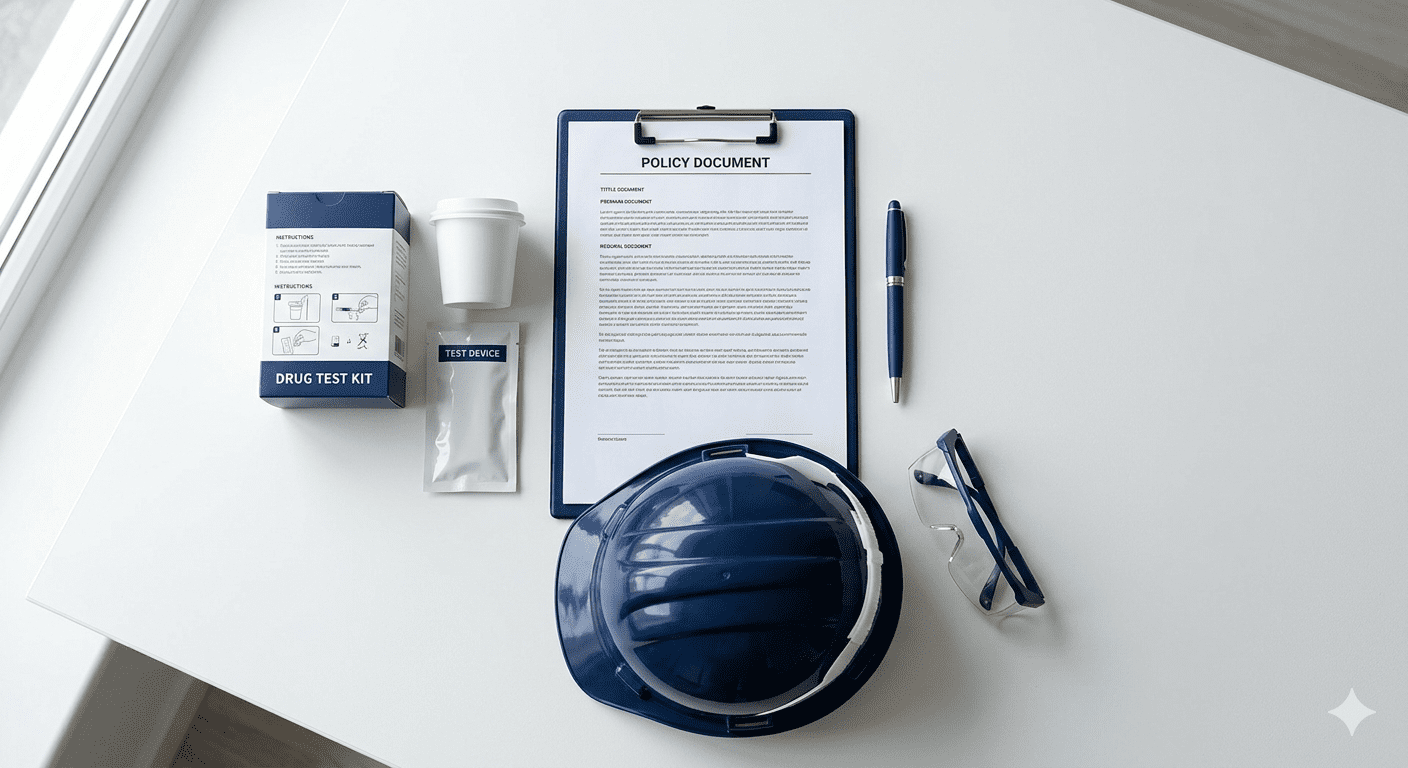
Establishing a workplace drug and alcohol testing program is one of the most significant steps an Australian organisation can take to protect its workforce, maintain compliance, and reduce operational risk. Whether you operate in mining, construction, transport, or any safety-sensitive industry, a well-structured program demonstrates your commitment to workplace health and safety obligations under the Work Health and Safety Act 2011.
This guide covers everything you need to know to get your program off the ground — from policy development through to ongoing management.
Why Drug and Alcohol Testing Matters
Substance impairment in the workplace is not a hypothetical risk. Safe Work Australia reports that alcohol and drug use contributes to a significant proportion of workplace injuries and fatalities each year. Beyond the human cost, organisations face substantial financial exposure through workers’ compensation claims, lost productivity, equipment damage, and potential regulatory penalties.
For officers and persons conducting a business or undertaking (PCBUs), there is also a personal duty of due diligence under WHS legislation. Implementing a testing program is one of the clearest ways to demonstrate that you have taken reasonably practicable steps to eliminate or minimise risk.
Step 1: Develop a Clear Drug and Alcohol Policy
Your policy is the foundation of your entire program. It should be written in plain language and cover the following:
- Scope — Who is covered? Employees, contractors, visitors, and labour hire workers should all be addressed.
- Prohibited conduct — Define what constitutes a breach. This includes attending work under the influence, consuming substances during work hours, and refusing to submit to testing.
- Testing types — Outline which testing methods your organisation will use: pre-employment, random, for-cause (reasonable suspicion), post-incident, blanket, and return-to-work.
- Consequences — Clearly state the disciplinary process for positive results or refusals. Ensure this aligns with your enterprise agreement or employment contracts.
- Support and rehabilitation — Reference your Employee Assistance Program (EAP) and any return-to-work pathways.
- Privacy — Explain how test results will be stored, who will have access, and how long records are retained.
Have the policy reviewed by a workplace lawyer to ensure it complies with relevant state and federal legislation, including the Fair Work Act 2009 and applicable privacy laws.
Step 2: Choose Your Testing Methods
Australian workplace testing is governed by two key standards:
- AS/NZS 4308 — Procedures for specimen collection and the detection and quantitation of drugs of abuse in urine.
- AS 4760 — Procedures for specimen collection and the detection and quantitation of drugs in oral fluid.
Oral fluid (saliva) testing has become the preferred method for many workplaces due to its non-invasive nature, difficulty to adulterate, and ability to detect recent use. Urine testing remains common for pre-employment screening as it provides a longer detection window.
Consider your operational requirements when choosing. If you need to test workers at remote sites or across multiple locations, oral fluid testing offers greater portability and faster results.
Step 3: Establish a Random Selection Process
Random testing is the cornerstone of most workplace programs. It serves as both a deterrent and a detection mechanism. However, your selection process must be genuinely random and defensible.
Key requirements for a legally sound random selection process:
- Every eligible employee must have an equal probability of being selected in each round.
- The selection method must be documented and auditable.
- Selection frequency should be defined in your policy (e.g., quarterly, monthly).
- Records of each selection event — including who was in the pool, who was selected, and the outcome — must be retained.
Manual methods such as drawing names from a hat or using basic spreadsheet functions are difficult to defend in a tribunal setting. Purpose-built software ensures true randomness and creates an automatic audit trail.
Step 4: Train Your People
A policy is only effective if your people understand it. Training should be delivered at multiple levels:
- All employees — Policy awareness, their rights and obligations, what to expect during a test, and how to access support services.
- Supervisors and managers — Recognising signs of impairment, how to initiate for-cause testing, documentation requirements, and the importance of maintaining confidentiality.
- Testers and collection officers — Proper collection procedures under AS/NZS 4308 or AS 4760, chain of custody requirements, and handling refusals or attempts to cheat.
Training should be documented and refreshed annually. New employees should receive policy induction as part of onboarding.
Step 5: Set Up Your Record-Keeping System
Accurate, secure record-keeping is non-negotiable. You need to maintain records of:
- Every test conducted, including date, time, location, collector, and result.
- Selection events, including the pool and methodology.
- Chain of custody documentation.
- Any disciplinary actions or return-to-work plans.
- Training records for all staff.
These records must be stored securely with restricted access to protect employee privacy. They also need to be readily retrievable in the event of a workplace incident investigation, regulatory audit, or Fair Work Commission proceeding.
Many organisations start with spreadsheets but quickly find this approach unsustainable as the program scales. Dedicated testing management software provides secure storage, automated reporting, and a defensible audit trail from day one.
Step 6: Engage a Testing Provider (If Outsourcing)
If you are not conducting testing in-house, you will need to engage a third-party provider. When evaluating providers, consider:
- Are their collectors trained and certified to the relevant Australian Standards?
- Can they service all of your locations, including remote sites?
- What is their turnaround time for confirmation testing at an accredited laboratory?
- Do they provide digital reporting, or will you be managing paper forms?
- Can they integrate with your existing systems?
Step 7: Communicate and Launch
Before conducting your first test, ensure every person covered by the policy has been notified. This typically involves:
- Distributing the policy document (with signed acknowledgement).
- Conducting awareness sessions or toolbox talks.
- Providing advance notice of the program commencement date.
- Making the policy accessible at all times (e.g., on your intranet or in common areas).
Transparency builds trust. Employees are far more likely to accept a testing program when they understand the rationale, the process is fair, and support is available for those who need it.
Step 8: Review and Improve
A testing program is not a set-and-forget exercise. Schedule annual reviews to assess:
- Whether your testing frequency and methods are still appropriate.
- Trends in positive results by department, location, or time period.
- Whether any Fair Work or WHS developments require policy updates.
- Feedback from employees, supervisors, and testers.
- Whether your record-keeping and reporting meet current requirements.
Getting Started
Setting up a workplace drug and alcohol testing program involves careful planning, but the investment pays dividends in safety, compliance, and organisational culture. The key is to start with a solid policy, implement genuinely random selection, train your people, and maintain thorough records.
If you are looking for a platform to manage your testing program — from random selections and test logging through to compliance reporting — start your free trial with FairTest and see how straightforward it can be.